5 plumbing and electrical businesses. Real ad spend. Real revenue growth. Here's what's actually possible with Google Ads when they're set up properly.
Google Ads aren’t for everyone. We’ll say that upfront.
If you’re in a major city and your average job value is under a thousand dollars, there’s a good chance Google Ads won’t work for you. The cost per lead in competitive markets means the maths just doesn’t stack up on small jobs.
But if you can sell, you do quality work, and you get repeat customers — Google Ads can be an absolute goldmine.
Here’s why.
Let’s say you’re a plumber in Sydney. You pay $200 for a lead. One in three leads converts into a job worth $1,500. So you’ve spent $600 to bring in $1,500. Not much profit left on that first job.
But that’s not the full picture.
That customer leaves you a review. They call you back when the hot water system goes six months later. They refer you to their neighbour. Over five years, that one customer could be worth $5,000 to $10,000 to your business.
Google Ads are expensive. And they’re only getting more expensive as competition grows. But if you’re thinking long-term, you want leads now, and you can stomach the cost of spending money to make money — they’re one of the fastest ways to grow a trade business in Australia.
Who Google Ads work for
Trade businesses with an average job value above $1,000
Businesses that convert leads well and follow up properly
Owners who understand it's an investment, not a slot machine
Businesses that do good work and generate repeat customers and referrals
Regional businesses where competition is lower and cost per lead is cheaper
Who Google Ads don’t work for
Businesses with low average job values in competitive metro areas
Businesses that don't answer the phone or follow up on enquiries
Owners expecting $50 leads in Sydney or Melbourne
Anyone looking for a "set and forget" solution
How we measure success
We don’t measure success by clicks, impressions, or any other vanity metric. We measure it by one thing: qualified enquiries.
A conversion in our world is someone who has either called the business or submitted a form. Not a website visit. Not a click. An actual person interested in the service you offer.
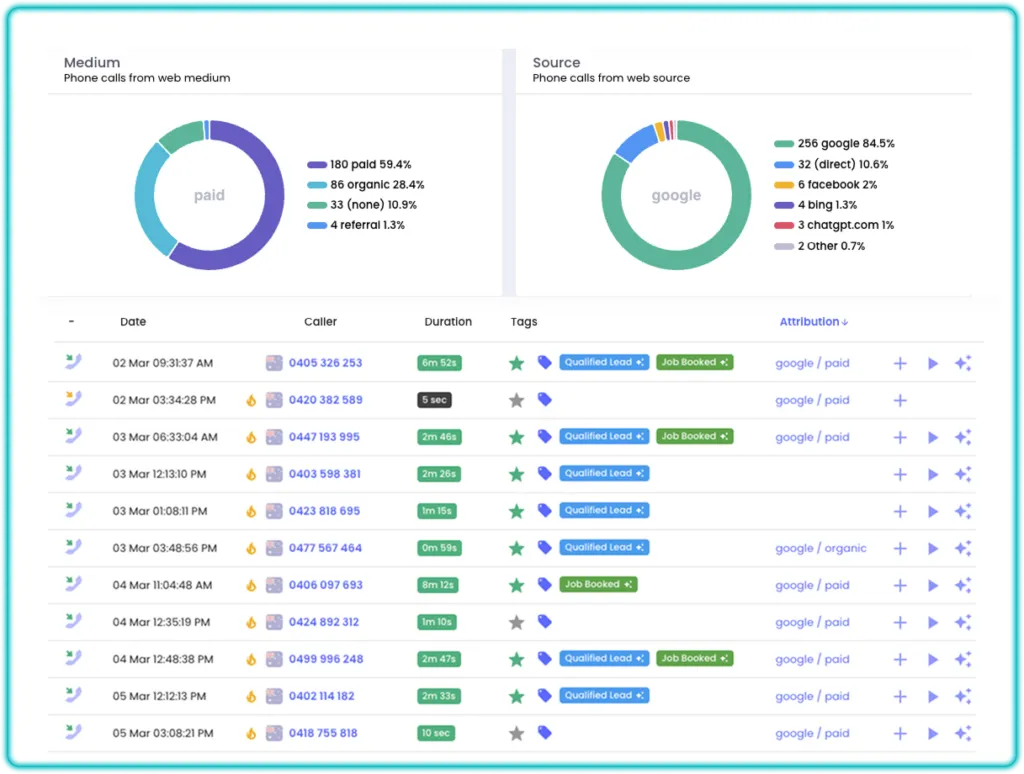
We track every lead through WildJar — call recording and reporting software that shows us exactly who’s calling, what number they called, whether the job was booked, and whether it was a qualified lead or a spam call. Every call is recorded so we can audit lead quality, not just lead volume.
01
Case Study #1
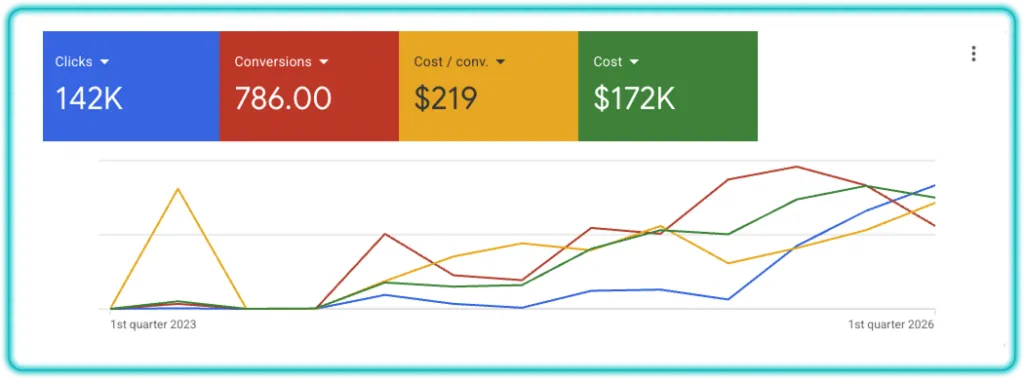
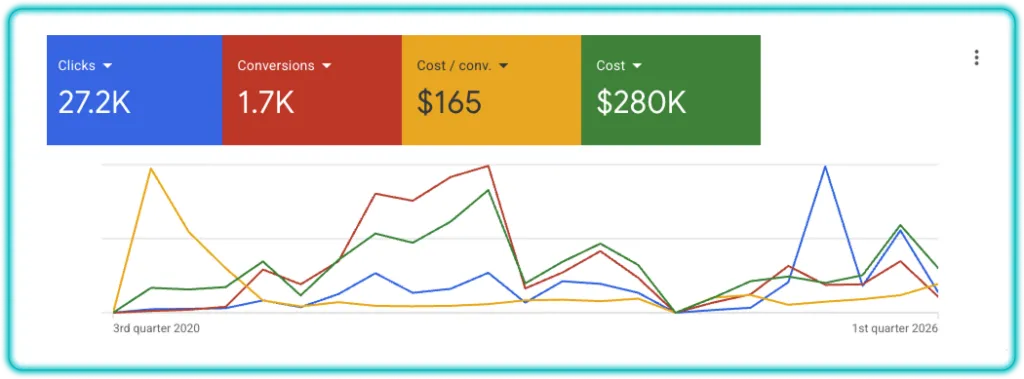
Came to us on $50 a day, looking to move away from construction work and focus on residential plumbing. We scaled the account to $1,000 per day, now generating 30 to 40 qualified enquiries per month.
The business has grown from $50,000 to over $200,000 a month. Google Ads was the engine — SEO and the referral network he’s built through years of good work do the rest.
$219 per lead in Sydney sounds expensive until you look at his average job value in the thousands. The maths works because he thinks in lifetime value, not cost per lead.
02
Case Study #2
Plumber in Adelaide
Started his business relying on HiPages, billing around $10,000 a month. We launched his Ads account on $50 a day and scaled to $300.
Last month he billed over $220,000 in revenue. From $10K to $220K a month in under two years.
The growth comes from two things: a steady stream of new leads from Google Ads, and the repeat customers that pipeline has built over time. Regional cities like Adelaide have less competition, cheaper leads, and faster scaling — this is exactly the kind of business Google Ads was made for.
03
Case Study #3
Plumber in Melbourne
Launched a brand new account on $50 a day, now at $150. Lead costs have been surprisingly low for Melbourne — well below the typical metro range.
The business has grown from $20,000 a month to over $300,000. That’s not Ads alone — they also run SEO, Facebook Ads, and outbound. But Ads has been a significant part of building their customer base.
This client doesn’t want to increase spend further. They’re getting enough work at $150 a day to keep the team busy. Not every account needs to push to $1,000 a day — the right spend is what matches your capacity.
04
Case Study #4
Electrician on the Gold Coast
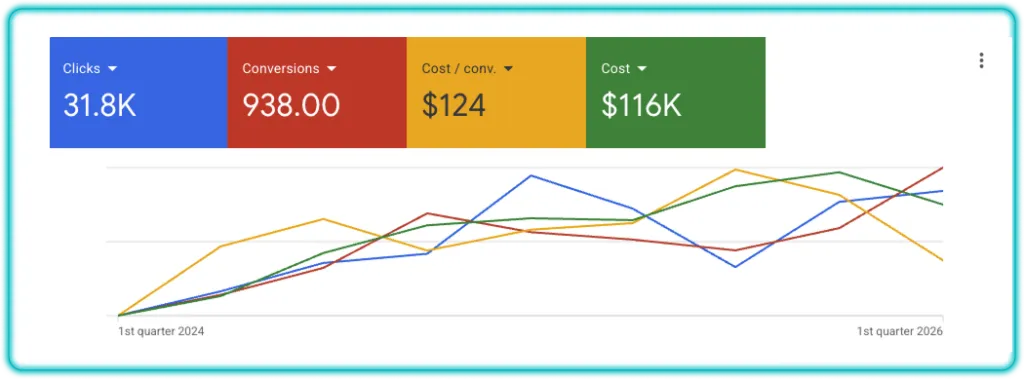
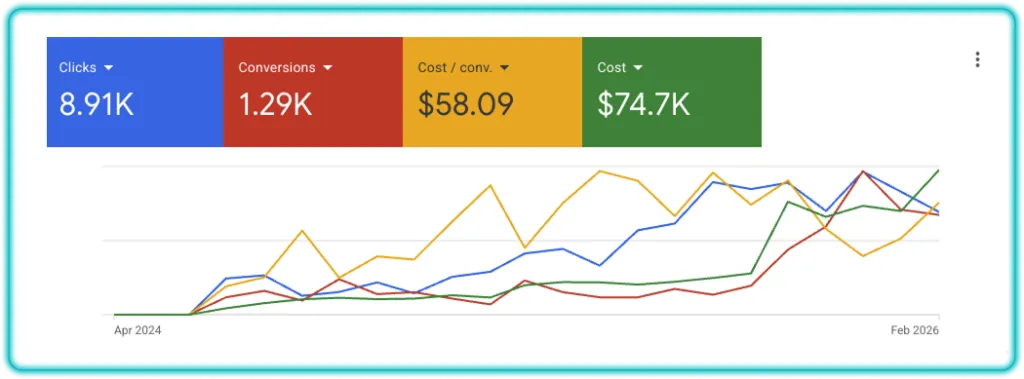
Came to us after their in-house marketing team wasn’t delivering. We launched the account on $50 a day and scaled to $1,000 — maintaining an average cost per lead of just $58.
From $74,000 in total spend, the return is at least 10 to 20 times that. The consistent lead flow has let them move away from project work and keep eight to ten guys busy on the tools every day. That’s the real result — not just leads, but a business model shift.
Electrical leads are typically cheaper than plumbing because competition is lower. At $58 per lead, this is some of the strongest unit economics we’ve seen.
05
Case Study #5
Electrician in Sydney
We took over this account from a previous marketing partner who wasn’t delivering results. Sydney is competitive, costs fluctuate, and inheriting someone else’s account structure is never clean.
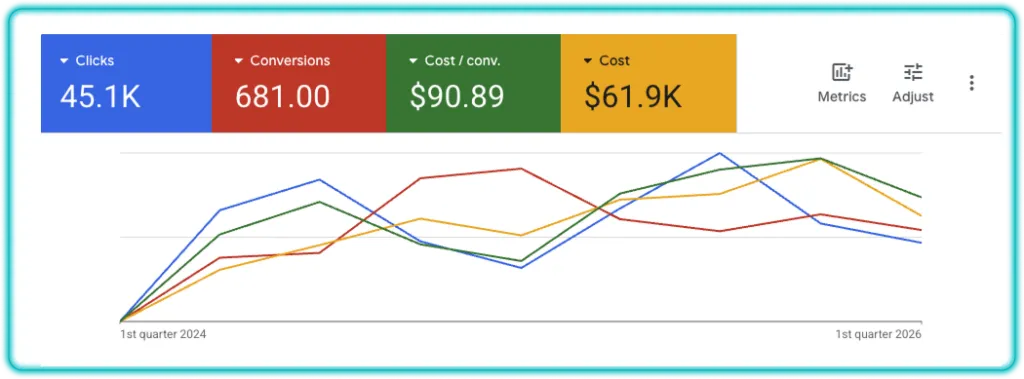
Over 14 months we’ve scaled the budget from $50 to $300 a day while keeping cost per lead under $200. Not our flashiest result — but the client stayed because the results are real and improving.
We’re including this one because it’s honest. Not every Ads story is a 20x return from day one. Sometimes the win is stabilising an account that was bleeding money and building a foundation for growth.
Getting Google Ads to work for your trade business
We generate over 1,000 leads a month on Google for our clients. Here’s what we’ve learned about what separates the accounts that work from the ones that don’t.
Campaign structure matters. Most underperforming accounts have the same problems — too many campaigns, too broad a keyword match, no negative keywords, ad groups targeting everything at once. Tight keyword groupings, proper location targeting, and ad copy that matches the search intent is the foundation.
Track leads, not clicks. Every one of our accounts has call tracking through WildJar and proper form tracking. We know which keywords and campaigns generate real enquiries — not just traffic. If your agency reports on clicks and impressions, they're hiding the real numbers.
Don't send traffic to your homepage. Every campaign needs a dedicated landing page built for one thing: getting the visitor to call or submit a form. Clear headline, trust signals, phone number that's impossible to miss, no distractions.
Be patient and realistic. You're going to have days where you burn money and get nothing. Weeks where CPL spikes. The businesses that succeed stick with it and let the optimisations compound. The ones that fail expect $50 leads in Sydney from week one and pull the plug after 60 days.
Answer the phone. The single biggest reason Google Ads "don't work" for some businesses. We generate the leads — if no one picks up or the follow-up takes three days, those leads go to the competitor who answers on the first ring.
Realistic return on investment
The return you get from Google Ads depends on a handful of factors. Here’s what actually moves the needle:
Answer rate is everything. If the phone isn't being answered, Google Ads won't work — full stop. Even missing one in three calls can tank your numbers. The leads are there, but if nobody picks up, you're paying for nothing.
Average job value matters.If your average job is under $700, it's going to be really tough to turn a profit on paid leads. Above that, the economics start to work — especially if you're upselling or doing higher-ticket work.
Location is one of the biggest factors. Major cities like Sydney and Melbourne, you're looking at $150 to $200+ per enquiry. That's tough unless you're chasing high-ticket jobs. Regional areas are significantly cheaper, which is why our regional clients tend to see stronger returns.
Minimum target: 3x ad spend. If you spend $2,000 on ads, you want to bring in at least $6,000 in revenue. That's roughly break-even once you factor in costs. The real target is 5x — spend $2,000, bring in $10,000. That's where you start seeing actual profit.
Some months will be much higher. During peak seasons — air conditioning in summer, blocked drains in the wet season, storm damage in Queensland — returns can hit 10 to 20x. But averaged across the year, 3 to 5x return on ad spend is realistic for most trade businesses.
The long-term return is where the real money is. That first job might only be 3 to 5x your ad cost. But the repeat work, the referrals, and the reviews that customer generates over the next few years — that's where the return compounds. The clients who win with Google Ads are the ones who think in lifetime customer value, not cost per lead.
Take the first step and schedule a
Free personalised growth plan
Tailored to your plumbing or electrical business, uncover how to get more leads & more booked jobs. Schedule a call today.