Organic SEO is losing ground to AI Overviews and LLMs. Google Ads get more expensive every year. Which leaves Google Maps.
Your Google Business Profile shows up above organic results, appears in AI search, and generates phone calls from people who’ve already read your reviews — leads that convert at a higher rate than almost any other source.
It’s also where AI platforms are pulling data from. Google AI Mode, ChatGPT, Gemini, Bing Places, and Apple Business Connect all reference Google Business Profiles when recommending local businesses. Optimising your Maps presence now builds visibility across every platform.
For trade businesses, Google Maps consistently delivers the highest return on investment — and it’s where we recommend starting.
How we measure success
We don’t measure success by clicks, impressions, or any other vanity metric. We measure it by one thing: qualified enquiries.
A conversion in our world is someone who has either called the business or submitted a form. Not a website visit. Not a click. An actual person interested in the service you offer.
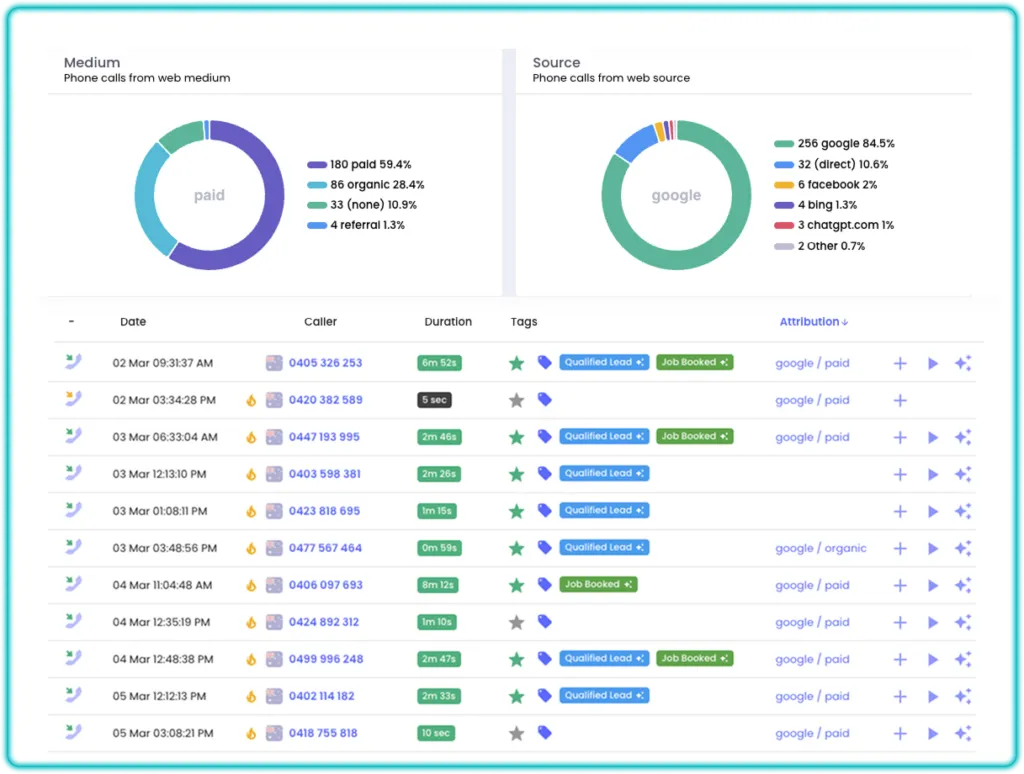
We track every lead through WildJar — call recording and reporting software that shows us exactly who’s calling, what number they called, whether the job was booked, and whether it was a qualified lead or a spam call. Every call is recorded so we can audit lead quality, not just lead volume.
Clicks from the listing. How many people are clicking through to your website from Google Maps.
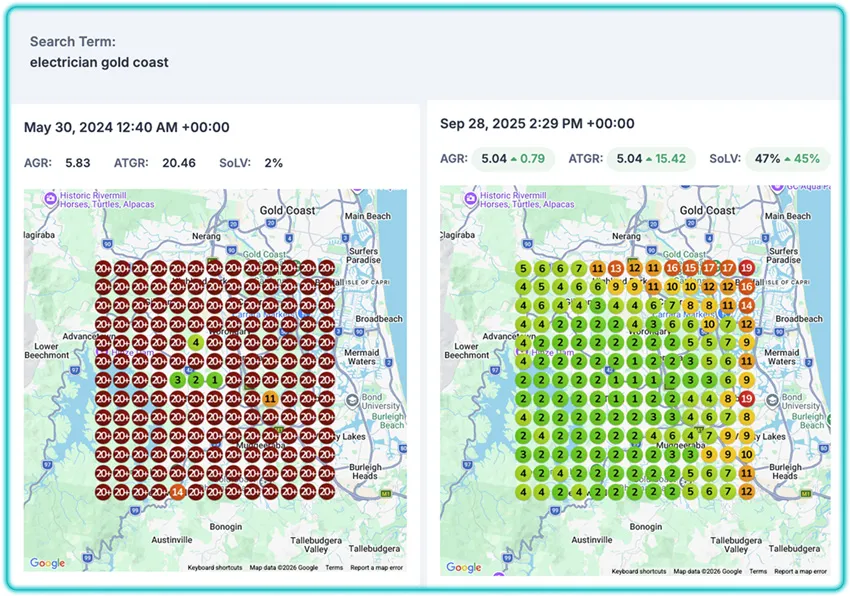
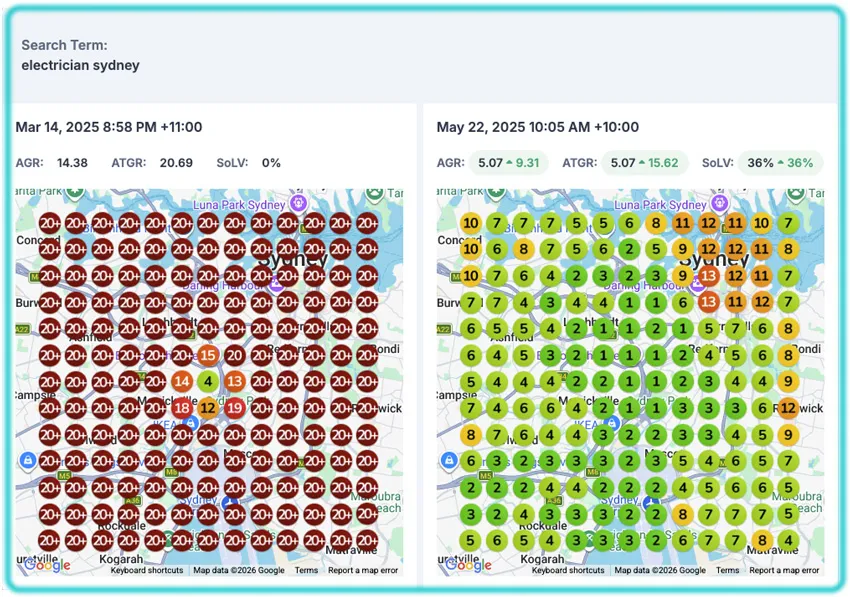
Geo grid expansion. Whether your listing is expanding its visibility across your service area — tracked via heat maps that show where you rank for target keywords across the map.
Calls attributed to the listing. How many phone calls are coming directly from the Google Business Profile.
01
Case Study #1
Adam from AB Electrical tried six or seven agencies before finding us. When we started working together, the business was doing $40,000 to $50,000 a month.
Revenue grew to well over +200k a month — and since recording the video interview, it’s climbed further. Revenue is now up over 6x from when we started. AB Electrical ranks in the top 3 for “electrician Sydney” plus a host of other keywords across the North Shore area.
The lead flow has allowed Adam to get fully off the tools and now manage a team of 10+ tradies full-time. That’s the real result — not just rankings, but a complete shift from tradesman to business owner.
“I tried six or seven agencies before I found you and just got rubbish results. The transparency you provide gives me a lot of confidence. All the reporting that lands in my inbox showing what's working, what's not, what we're doing next month — I don't even have to think about it. I emptied my Ute last week. Adam - AB Electrical & Communications”
02
Case Study #2
T42 Electrical
T42 Electrical aren’t ranking over the main Gold Coast CBD area just yet — their listed address sits on the outer side. But they’ve taken up the entire back section of the Gold Coast for keywords like “electrician Gold Coast” and “emergency electrician Gold Coast,” plus a host of other terms.
That coverage has driven a meaningful increase in leads and revenue for the business. The next phase is creating a second Google Business Profile to target the central CBD area — a multi-GBP strategy that lets us expand the footprint without waiting for one listing to cover the entire region.
This is a good example of working with the geography you have. You don’t need to rank across an entire metro area from day one. Owning your section of the map first, then expanding from there, is often faster and more profitable.
03
Case Study #3
Aussie Oncall Plumbing
Zach from Aussie Oncall Plumbing started with us billing under $10,000 a month, relying on a handful of expensive Google Ads leads that weren’t converting and a few leads from HiPages. He was still subcontracting — he didn’t have enough work to keep going on his own.
12 months later, he’s generating 35 to 50 organic leads per month across multiple Google Business Profiles, averaging $50,000 a month in revenue with his best month hitting $73,000 — as a one-man band.
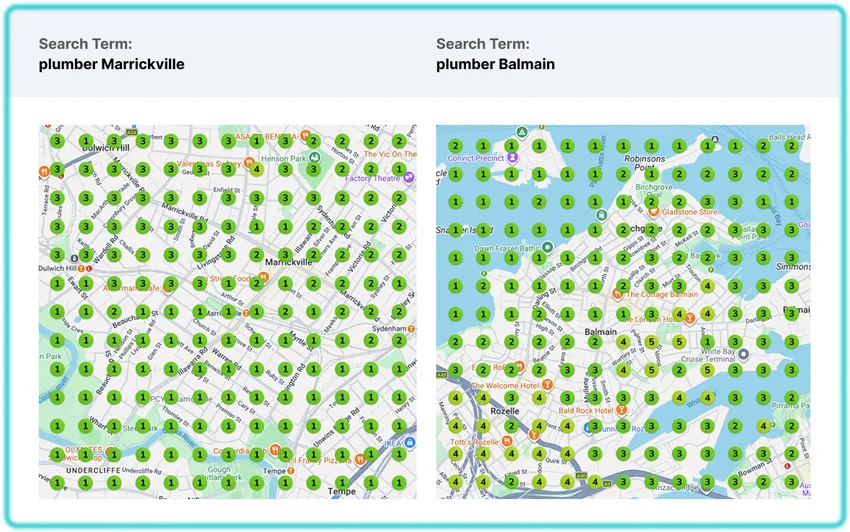
The multiple GBP strategy is key here. Instead of relying on one listing to cover a wide area, we set up profiles in strategic locations so each one dominates its local map results. Combined, they generate 50 to 60 calls per month.
“Last month we hit 73K as a one-man band. I don't need to ever stress about work anymore. I just know work's coming in consistently. You'd be stupid not to do it. It will honestly change your life. Zack - Aussie Oncall Plumbing”
04
Case Study #4
Plumbwell Plumbing Services
Sam from Plumbwell Plumbing Services runs multiple Google Business Profiles across the Inner West of Sydney, generating 50 to 80 leads per month from Google Maps alone.
This is another multi-GBP strategy in action. The Inner West is a dense, competitive market — one listing can’t cover the full area effectively. By positioning profiles in strategic suburbs, each listing earns strong local rankings and contributes to an overall lead volume that would be impossible from a single profile.
50 to 80 calls per month from Google Maps, with no ad spend behind it, is the kind of return that makes Google Maps our highest-ROI channel.
“Couldn't recommend Tom highly enough, very clear communication with the process and more importantly results. If you need to boost your online presents he is your man. Sam - Plumbwell Plumbing”
05
Case Study #5
Electrician in Sydney
The client’s Google Business Profile was listed in a low-population area on the Northern Beaches. It was generating about 5 calls per month. The rankings were fine for the immediate area, but there just wasn’t enough search volume to drive meaningful lead flow.
We relocated the listing to Newtown — a denser, higher-demand suburb. Within the first month, the profile went from 5 calls to 30 calls. It’s since increased to 50 calls per month.
Same business. Same services. Same reviews. The only thing that changed was the listing address. That one move 10x’d the call volume overnight.
This is why we always assess listing location as part of our strategy. If your GBP is sitting in a low-population area, you could have perfect optimisation and still barely get calls. Sometimes the biggest win is simply being in the right spot on the map.
Getting Google Maps to work for your trade business
Your website is the foundation. Google Maps rankings are tied to your website's relevance and authority. You need at least 30 service pages, a handful of core blog posts, and location pages for your service areas. The goal is to prove to Google that you are who you say you are and you service the area you claim to service.
Reviews are fuel. Review count and review velocity (how fast you're getting new ones) directly impact rankings. The more consistently you're getting reviews, the faster the listing moves.
Directory listings amplify everything. Being listed on Yellow Pages, True Local, Yelp, Localsearch, and other directories with consistent business details (name, address, phone number) reinforces your legitimacy to Google. These citations also feed into AI platforms.
Listing location matters more than you think. As Case Study #5 shows, where your GBP address sits can be the difference between 5 calls and 50. We always assess whether your current location is optimal for the search volume you're targeting.
Multiple GBPs expand your footprint. One listing can only cover so much of the map. For businesses that service a wide area, a multi-GBP strategy lets you dominate more of the map without waiting years for one listing to expand.
It takes time, but it compounds. Unlike Google Ads where leads stop when you stop spending, Google Maps rankings build over time. The work you put in now continues generating leads months and years from now — without ongoing ad spend.
Realistic return on investment
Existing listings move faster. If you already have a Google Business Profile that's under-optimised, results can come quickly. A listing with reviews and history just needs the right signals to start climbing.
New listings take longer. Brand new profiles need time to build authority. Expect a slower ramp-up in the first few months.
Review velocity accelerates everything. If you're actively getting reviews from customers, the listing moves faster. If reviews are slow, everything takes longer.
By 3 to 4 months, you should be profitable. Whether you're spending $2,000 or $4,000 per month on optimisation, we want you bringing in at least 3x that in revenue. That's roughly 12 to 15 calls per month.
By 6 months, target 20 to 30 calls. This is where the listing starts to compound. Rankings are stronger, reviews are building, and the lead flow becomes consistent.
Most single listings cap out at 30 to 60 calls per month. After that, the move is to set up the next GBP and start stacking. Multiple listings compounding together is how our top clients hit 60 to 100+ calls per month.
Over 12 months, expect 5x return on your monthly spend. Averaged across the year, a well-optimised Google Maps presence should return at least 5x what you're investing per month. And unlike Ads, the leads don't stop when the budget does.
Take the first step and schedule a
Free personalised growth plan
Tailored to your plumbing or electrical business, uncover how to get more leads & more booked jobs. Schedule a call today.